




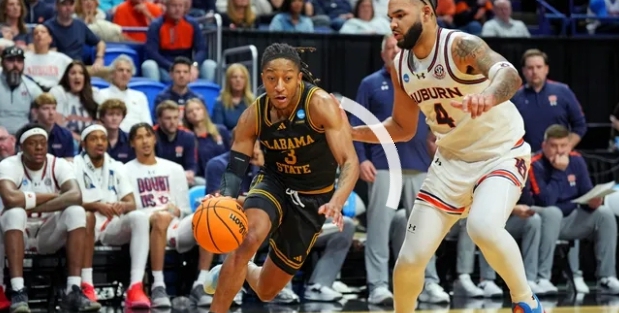
The recent Iron Bowl between the Auburn Tigers and the Alabama Crimson Tide has become a focal point of intense scrutiny due to controversial officiating decisions that have overshadowed the on-field performances. The Southeastern Conference (SEC) has acknowledged these concerns and is reportedly reviewing the officiating crew’s performance during the game.
Missed Facemask Penalty
A pivotal moment occurred early in the first quarter when Auburn’s return specialist, Brian Battie, fielded a kickoff and was met by Alabama’s Kendrick Law. Law’s tackle involved a clear and forceful grab of Battie’s facemask, twisting his head—a violation that typically results in a 15-yard penalty. However, the officiating crew failed to penalize Alabama for this infraction. Instead, they flagged Auburn for an illegal block in the back, pushing the Tigers further into their own territory.
The CBS broadcasting team, comprising Brad Nessler and Gary Danielson, expressed astonishment over the oversight. Danielson remarked, “We’ve seen facemasks where the hand rubs across the facemask, but you’d have to not understand football to not see this.” Nessler added, “That’s the worst non-call I’ve seen this year.”
Post-Game Altercation and Referee Injury
The game’s conclusion was marred by a physical altercation between players from both teams. Following Alabama’s late touchdown, tensions escalated during the ensuing kickoff, leading to a scuffle. In the chaos, the lead referee was inadvertently trampled by players. Fortunately, he sustained no serious injuries and was assisted to his feet by Auburn tight end Luke Deal.
Coaching Reactions and Historical Context
Auburn’s head coach, Hugh Freeze, was visibly frustrated by the officiating lapses, particularly the missed facemask call. His reaction on the sidelines reflected the sentiments of many associated with Auburn, who felt that the non-call had a significant impact on the game’s momentum.
This incident is not isolated. Historically, Auburn has been involved in games with controversial officiating decisions. Former head coach Gus Malzahn previously addressed concerns over repeated officiating controversies in Auburn games, highlighting the ongoing challenges teams face with inconsistent officiating.
SEC’s Response and Broader Implications
In light of these events, the SEC has acknowledged the need for a thorough review of the officiating crew’s performance. The conference aims to ensure accountability and uphold the integrity of the game. This investigation underscores the broader challenges in collegiate athletics regarding officiating standards and the mechanisms in place to address errors.
The missed facemask call and the subsequent handling of the situation have reignited discussions about the potential for expanded use of replay technology to assist officials in real-time decision-making. Advocates argue that integrating more technological aids could reduce human error and enhance the fairness of the game.
Conclusion
The recent Auburn-Alabama game has brought officiating practices under intense scrutiny. As the SEC conducts its investigation, stakeholders across collegiate football await outcomes that could influence future protocols and the implementation of technology in officiating. The goal remains to ensure fair play and maintain the trust of teams,
coaches, and fans alike.